
Randomized Controlled Trials (RCT’s) are studies that test an intervention by randomly assigning participants to a treatment group or a control group, then comparing outcomes to estimate the true effect of the intervention while minimizing bias. And running them is a high-stakes endeavor.
Key features of a RCT include;
● Randomization: participants are assigned by chance to groups to balance known and unknown factors.
● Control group: receives placebo, standard care, or no intervention for a fair comparison.
● Blinding: participants, clinicians, or analysts may not know group assignments to reduce bias.
● Predefined outcomes: success measures are set in advance and analyzed with prespecified methods.
RCTs, or Randomized Controlled Trials, are a type of scientific experiment, particularly prevalent in medicine and social sciences, considered the "gold standard" for determining the effectiveness of an intervention or treatment but they come with steep costs, lengthy timelines, and ethical challenges (like giving patients placebos in serious conditions). Even when they succeed, their one-size-fits-all approach often tells us little about how to personalize treatments for individual patients.
But what if we could test a new therapy on a virtual version of each patient first predicting outcomes and risks before ever administering a dose in real life.
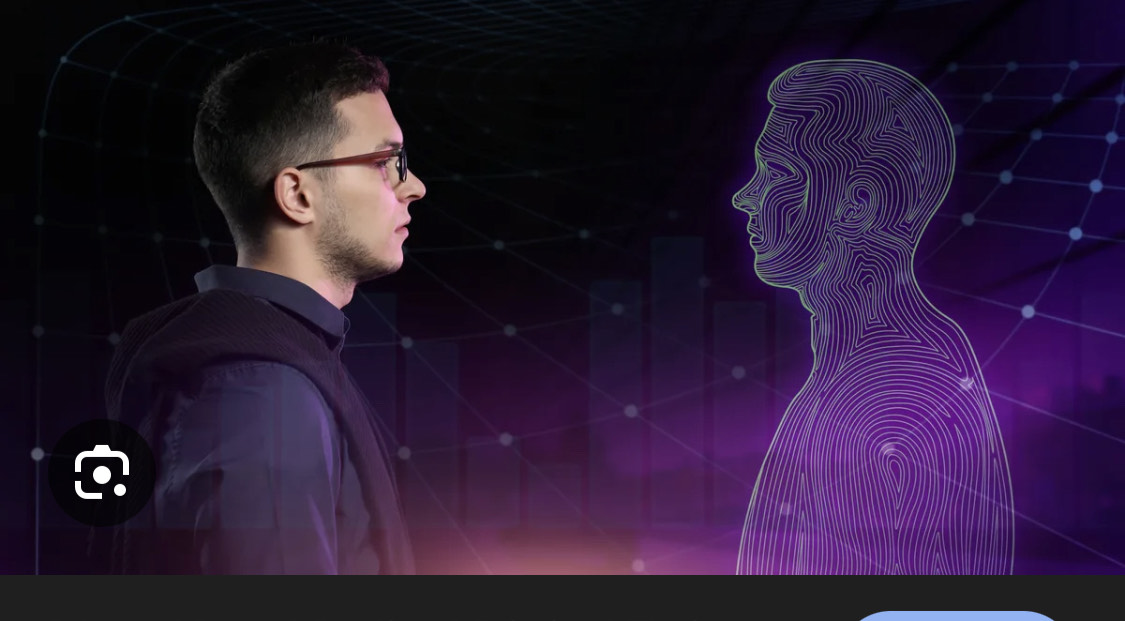
A Digital Patient Twin is essentially a precise virtual replica of a patient or a mirror image in software, reflecting that person’s unique health profile. It integrates multidimensional patient-specific information (e.g. genetics, medical history, labs) and can be continuously updated with real-time inputs like sensor readings and wearable device data.
The Digital Patient Twin serves as a living model of the individual, evolving as the patient’s condition changes. Developers build these twins using AI and computational models trained on vast clinical datasets to ensure the twin’s behavior closely mimics how the real patient would respond. The result is a dynamic digital avatar of the patient that can be used to simulate physiological processes and treatment effects. Doctors or researchers can effectively “experiment” on the digital twin trying different drugs or doses in silico to forecast how the real patient might react.
In practical terms, creating a DPT involves aggregating data from many sources: electronic health records, genetic profiles, lab results, imaging, and increasingly IoT health devices (smartwatches, glucose monitors, etc.). Advanced algorithms then use this data to train a personalized model of the patient. The more high-quality data available, the more faithful the twin. Some highly developed patient twin models even simulate organ functions and cell-level processes.
The power of a DPT lies in its ability to run what-if experiments. For example, clinicians can use a patient’s twin to virtually test a medication’s effect including potential drug interactions or side effects before the person takes their first pill. If an approach looks unsafe or ineffective on the twin, it can be adjusted or avoided, saving the real patient from unnecessary risk.
But are we there yet? Can we accurately replicate human Biology? And the answer is ‘Not quite Yet’. The human body is one of the most
complex biological systems in existence. But can we try? My answer to that is yes, to a certain extent.
Using Digital Patient Twins in RCTs
Digital patient twins can dramatically improve safety monitoring and decision-making in trials. By forecasting individual patient responses, DPTs help identify risks before they happen. For instance, a twin can be used to predict if a patient might have an adverse reaction to a drug or if their disease might suddenly worsen, allowing researchers to intervene early or modify the protocol. In a traditional trial, each patient’s outcome is just one data point. But with a digital twin, we gain a whole trajectory of predicted outcomes for that patient under various scenarios. Using these predictions as a guide (a process known as prognostic covariate adjustment), researchers can reduce outcome variability and sharpen the detection of drug effects.
One of the most exciting advantages of digital twins for me is how they enable personalization in clinical trials and ultimately, in treatment.
Traditionally, RCTs focus on average outcomes, but DPTs allow researchers to tailor and predict results for each individual. Because a twin incorporates a patient’s unique genetic makeup, disease biology, and lifestyle factors, we can simulate how different therapies or dosages would affect that specific person. This means trials can move away from the old one-size-fits-all approach and evaluate treatments in a more granular, patient-by-patient fashion. For example, in cancer research, digital twins of patients’ tumors have been used to predict chemotherapy responses, helping oncologists choose the optimal drug regimen for each patient
But in the end, ultimately, Digital patient twins wont just about doing the same trials faster they allow us to ask new questions and gain insights that traditional trials simply can’t provide. In a conventional RCT, researchers test one set of conditions (one drug dose vs. placebo, for example) and get a narrow slice of data. But with a DPT, you can simulate countless scenarios on the same patient or population. This capability unlocks a more profound understanding of disease and treatment dynamics. Researchers can probe questions like: What if we start treatment earlier? What if we combine Drug A with Drug B? What if the patient had a slight genetic variation? These scenarios can be explored in silico, generating hypotheses and guiding real-world experiments
However, implementing digital patient twins in RCT’s isn’t without challenges. It’s important to acknowledge these hurdles and the ongoing efforts to overcome them:
● Data Integration and Quality: Building an accurate DPT requires huge amounts of high-quality data for each patient. This includes
everything from genomic sequences to long-term clinical histories to real-time sensor data. Often, this information is scattered across
different systems and formats. Integrating diverse data streams (EMRs, wearables, imaging, etc.) into one cohesive model is technically
complex. Many pharma companies also still operate with siloed, legacy data infrastructure. Ensuring data standardization and
completeness is a foundational challenge. A twin is only as good as the data it’s fed.
● Model Validation and Reliability: How do we know a digital twin’s predictions are correct? Trust in DPTs needs to be earned through
rigorous validation. This means testing the twin against real outcomes and making sure it can reliably predict what will happen.
Regulators like FDA and EMA have emphasized the need for transparency and verification of AI models used in trials. Methods such as
back-testing twins on historical trial data, checking their predictive accuracy, and using explainability tools (like SHAP or LIME for AI) are
being employed to build confidence in twin predictions. The good news is that early applications have shown promising results (e.g., the
Alzheimer’s trial twin that recreated patient trajectories. Still, the industry must continue demonstrating that DPTs are fit for the purpose
that they can simulate reality closely enough to inform critical decisions.
● The most important challenge will be modeling biological complexity and its limits: Human biology is extraordinarily complex.
People are not computers; everything from our molecular pathways to environmental influences means that a digital twin is always a
simplification of reality. Certain emergent behaviors or rare side effects might not be predicted if the model doesn’t encapsulate the right
variables or interactions.
In the end, whether they serve this purpose overall or not, I believe that digital twins are a cornerstone of the broader trend towards precision
health. They embody the idea that treatment should be tailored to the individual and that data and simulations can guide those tailored
decisions.
For pharmaceutical executives and researchers, now is the time to explore how digital patient twins can be harnessed in your own development
programs. Start conversations with your teams about pilot projects, perhaps incorporating DPT analytics in an upcoming trial, or partner with technology firms that specialize in biomedical simulations. By investing in this innovation early, you position your organization at the forefront of the next revolution in clinical trials. Feel free to reach out to our team for more information or share this post with colleagues to spark discussion. Together, let’s embrace the future of RCTs and work towards smarter, faster, and safer trials through the power of digital patient
twins.