
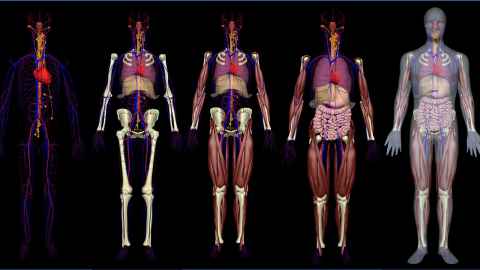
Systems Biology – Integrating Organs and Networks
The human body is not simply a collection of independent organs; it is a complex system of
interconnected networks spanning from microscopic molecules to entire organ systems. Instead
of isolating a single organ or pathway, systems biology looks at the bigger picture for example,
how a signal in one cell can cascade through metabolic pathways and influence the function of
distant organs. This approach reveals that biological processes are deeply interdependent,
with feedback loops and cross-talk between cellular signaling networks and whole-body
physiology. Such a comprehensive perspective lays the foundation for creating advanced
computational models that mirror the human body's complexity.
Digital Patient Twins: Virtual Models That Evolve with Data
Unlike a static medical record or a one-time model, the digital twin is continuously updated with
real-world data (medical records, wearable sensor readings, genomics) to accurately mirror the
patient in real time.
This concept, borrowed from engineering, ensures that the twin evolves as the patient’s
condition changes much like a living model rather than a snapshot. Advanced computing
techniques, including simulation software, machine learning, and AI, are used to analyze the
twin’s behavior and predict outcomes. The result is a powerful tool: doctors and researchers can
run virtual experiments on the twin, testing how a patient might respond to a drug or what might
happen if a certain risk factor changes, all without endangering the actual patient. A
well-developed digital twin can continuously learn and refine itself with each new piece of data,
making it ever more personalized and accurate.
Multi-Scale Modeling: From Cellular Signals to Whole-Body Dynamics
Digital patient twins are built on multi-scale models that incorporate the full spectrum of biology
from the tiniest molecular signals to the interactions of entire organ systems. Consider how
cellular signaling pathways (like hormone signals or immune responses) can trigger changes in
tissues, which then affect organ function and ultimately a person’s overall health. A robust digital
twin must capture all these layers. Researchers achieve this by combining models at different
scales into one interconnected simulation. A prime illustration is a recent multi-scale digital twin
for insulin resistance and type 2 diabetes, which links together intracellular insulin signaling,
organ-to-organ communication (such as between fat tissue, liver, and pancreas), and
whole-body metabolism.
In cardiology, digital twinning of the heart uses data from the cell to the organ to create
personalized simulations of a patient’s cardiac electrical activity. By including molecular data
(like ion channel behavior in heart cells) up through imaging of the whole heart’s anatomy, these
cardiac twins can replicate how the heart beats or develops an arrhythmia.
A Living Simulation That Learns and Adapts
A key principle of digital patient twins is that they are not static diagrams or fixed models they
function as living simulations. Just as your body continuously changes (whether through disease
progression, recovery, aging, or lifestyle adjustments), a digital twin continually ingests new data
and recalibrates itself. Think of it as a personalized health flight-simulator: it runs ongoing
simulations of your physiology, and each time new information comes in (say, a spike in blood
pressure or a change in lab results), the twin updates its parameters to stay aligned with reality.
For instance, a twin of a patient with heart failure might simulate how their cardiac output would
change if their medication dose is tweaked, or how their risk of hospitalization might drop if their
daily salt intake is reduced. These predictions aren’t one-off: the twin learns from any
discrepancies between predicted and observed outcomes, becoming more accurate over time.
This adaptive loop is powered by AI and machine learning algorithms embedded in the twin’s
software, which can recognize patterns in the patient’s data. Ultimately, the digital twin becomes
a continually evolving companion to the patient’s healthcare journey, providing decision support
that grows ever more tailored. In practice, this might mean early warning alerts (if the twin
foresees a negative trend), or dynamic treatment plans (if the twin finds a better therapy by
simulating alternatives). Crucially, this living model paradigm can transform patient care from
reactive to proactive intervening in a simulation long before a crisis would occur in real life.
Simulating Personalized Drug Responses
Now the area of interest for us is personalized medicine particularly, predicting how an individual
will respond to a given drug or therapy. In current practice,testing medication is a labor of
trial-and-error, and adverse side effects often only become apparent after a drug is taken. Digital
twins offer a powerful alternative. By conducting virtual drug screens on a twin, doctors could
pinpoint the optimal therapy (and even the optimal dose) before prescribing it in real life,
dramatically increasing the chances of success on the first try.
Pharmaceutical companies are also embracing digital twins to improve drug development. Drug
makers have partnered to create digital twins that “capture genetic and molecular interactions
that causally drive clinical and physiological outcomes. These models integrate data from cell
biology, genomics, and patient physiology to simulate how a new drug would behave in the
human body, enabling researchers to identify potential efficacy or toxicity issues early. Such
twin-driven simulations help in designing drugs that are both safer and more effective, and they
may reduce the need for extensive animal testing or purely empirical trials. Notably, adverse
drug reactions a huge problem in drug testing could be reduced if we use digital twins to
foresee dangerous side effects in susceptible individuals. By incorporating a patient’s genetic
information (pharmacogenomic data) into the twin, one can predict if they are likely to
metabolize a drug too quickly or slowly, or if they carry risk variants for certain drug reactions.
The ultimate vision is that before a patient swallows a pill or receives a new therapy, their digital
twin has already “test-driven” it: simulating how their heart rate, liver enzymes, tumor cells, etc.,
respond. This virtual test run can inform physicians whether to proceed, adjust the dose, or
choose an alternative – truly individualizing drug therapy and improving safety.
Patient Stratification and In-Silico Clinical Trials
In clinical trials today, finding the right participants and predicting who will benefit most from a
treatment is challenging. Digital twins can help by providing a virtual population of patients for
researchers to experiment on and identify which subgroups respond best. Before launching a
large (and expensive) trial, a pharmaceutical company might run a simulation with thousands of
digital twins to predict the likely outcome, optimal dosing, or potential safety issues. In the
future, we might see trials where a control group is partly “virtual” a drug’s effect on a digital twin
cohort is compared to real patients on standard care, enhancing statistical power ethically.
Moreover, if a digital twin is built for each participant in a trial, it could be used to continuously
stratify and adjust the trial in real time for instance, by identifying early on which type of patient
is responding and funneling more of those into the treatment arm.
From the cellular circuits inside a single cell to the coordinated rhythms of our organs, the
human body operates as a richly interconnected system. Digital patient twins are a
groundbreaking realization of this insight they harness systems biology knowledge to create a
virtual mirror of an individual, a mirror that learns, adapts, and predicts. Far from a static model,
a digital twin is a continuously updated simulation, weaving together data on molecular signals,
metabolic pathways, and whole-body dynamics into one cohesive picture of health. Early
medical research and clinical trials are already demonstrating the twin’s potential: helping
manage chronic diseases through personalized modeling, identifying the right drug for the right
person via virtual testing, and stratifying patients so treatments (and trials) can be better
targeted. As this technology matures, we can envision a healthcare future that is both deeply
personal and highly proactive. From organs to networks, the digital twin approach is
transforming our understanding of the human body and heralds a new era of medicine
where each patient’s care is guided by a faithful, evolving simulation of themselves. The human
body, in silico, is becoming one of our most powerful allies in the fight against disease – a
testament to what is possible.