
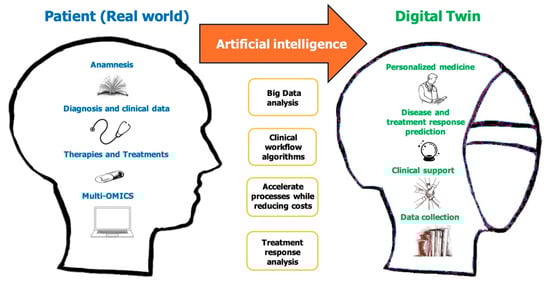
Patient twin models, also called digital patient twins, are changing how teams run clinical trial simulations. By mirroring real patient characteristics and outcomes, they help sponsors test eligibility criteria, endpoints, and even reduce control arm size. The catch is simple: no one should base decisions on a model they do not trust. That is why validation is non-negotiable for clinical trial decision support.
But, before executives and clinicians can rely on a patient twin model for clinical trial decision support, it needs to be rigorously validated. Robust validation builds trust that the model’s predictions are accurate and unbiased, which is crucial given the high stakes (ethics, cost, and regulatory compliance) in drug development.
Our blog post today explains what validation means in business terms, how to run face, internal, and external validation, and what to put in your validation plan so executives, clinicians, and regulators are aligned.
What does Validating a Digital Patient Twin Mean?
Validation is the evidence that your patient twin model works as intended, for the decisions you want it to support. Done well, it answers three questions:
- Does it look clinically plausible to experts
- Was it built and tested correctlY
- Does it predict reality on data it has not seen
When those answers are yes, leaders can use the twin to inform protocol choices with confidence.
Face Validation: Expert Review
Face validation is a sanity check. Does the model “look right” to experts? This involves having subject matter experts review the model’s structure, assumptions, and outputs for reasonableness. If seasoned clinicians and trial designers find the model’s behavior plausible, business leaders can be more confident in it. Face validation often uncovers obvious issues early, such as unrealistic assumptions or outputs so they can be fixed before any decision is made.
Assumptions. Are disease mechanisms, covariates, and outcome dynamics medically sensible
Sample outputs. Do simulated trajectories and subgroup patterns look like real patients
Data lineage. Are sources appropriate and traceable
.
Internal Validation: Verifying the Model's Integrity
After the model passes the expert eyeball test, it’s time to ensure it’s mathematically and technically sound. Internal validation focuses on verifying that the model is built and functioning correctly under the hood. It answers questions like: Do we get consistent, reproducible results? Internal validation often involves code reviews, testing, and stress-testing the model’s behavior. For a patient twin model, internal validation might include verifying that the AI or simulation produces stable outputs and that small changes in input data don’t cause absurd swings in predictions. It’s essentially rigorous quality assurance for the model.
Internal validation gives confidence that the model’s predictions are not due to coding errors or random chance. Executives might not dive into the code themselves, but they should demand evidence that the data science team has thoroughly tested the model’s integrity. Diligent internal validation ensures the patient twin model won’t deliver a nasty surprise when used in a high-stakes decision.
External Validation: Proving Real-World Performance
Finally, a patient twin model must prove itself against reality. External validation checks how well the model’s predictions match real-world data or outcomes not used in building the model. In other words, can the digital twin predict what actually happens in patients? External validation is often considered the gold standard for credibility. It can involve comparing model outputs to historical clinical trial results, epidemiological databases, or running the model on one dataset and comparing it to an independent dataset.
External validation can also be as simple as back-testing a patient twin model on known historical outcomes (e.g. could it have predicted the control arm’s results in a past trial?) and checking alignment. If discrepancies are found, the model may need recalibration. In fact, modelers often recalibrate or refine their models based on external validation findings to improve accuracy.
Next Steps: Building Your Validation Plan
A validation plan lays out what will be validated, how it will be done, who is responsible, and what criteria define success. It serves as a roadmap ensuring that by the time the model is in use, it has passed all necessary tests and reviews. Business leaders should insist on such a plan upfront, so they can greenlight the model’s use with full knowledge that due diligence is (or will be) done.
Build a clear validation plan that everyone can read
A written plan keeps teams aligned and speeds sign-off. At minimum include:
- Objectives and scope. Intended use, decisions supported, therapeutic area, target population, success metrics
- Face validation steps. Roles, activities, acceptance criteria, evidence to capture, sign-off
- Internal validation steps. Code and data checks, sensitivity tests, holdout strategy, metrics and thresholds
- External validation steps. Datasets or trials, comparators, statistical methods, pass or fail criteria, recalibration plan
- Metrics and acceptance criteria. Accuracy, calibration, discrimination, and error bounds that match the decision context
- Bias and subgroup analysis. Performance by sex, age, race, site type, and geography, with thresholds and remediation steps
- Documentation and governance. Versioning, model card, validation report, change control, and final approvals
What good looks like to a sponsor
- A one-page summary of purpose, risk level, and go or no-go criteria
- Clear evidence that clinicians agree the outputs are plausible
- Internal test results that are reproducible and pass predefined thresholds
At least one external benchmark showing predictions track real outcomes within agreed margins - A living validation report with owners, dates, and artifacts linked
How Infiuss does this;
Teams use the Infiuss digital patient twin platform to rehearse trials, test inclusion criteria, and pressure-test endpoints. We validate to the same standard outlined here and package the process in a plan that clinical, data science, QA, and executives can all sign off on. If you are starting from scratch, use the template below to align stakeholders fast.
Having a clear validation plan not only keeps the team accountable but also makes it easier to communicate progress to leadership and auditors. It translates the technical work into a business assurance framework. As you develop or refine your organization’s digital patient twin capabilities, make validation planning a non-negotiable part of that journey.
To help you get started, we’ve created a Patient Twin Model Validation Plan Template. This template outlines all the key components discussed from face validation checklists to sample acceptance criteria – in a handy format. It’s a practical guide to ensure your model validation is comprehensive and exec-ready. Download the validation plan template and customize it to jumpstart your own model validation process. By following a structured plan, you’ll foster greater trust in your patient twin model across clinical, regulatory, and executive teams.