
Biological Standards Are the Infrastructure AI Needs for Pandemic Preparedness
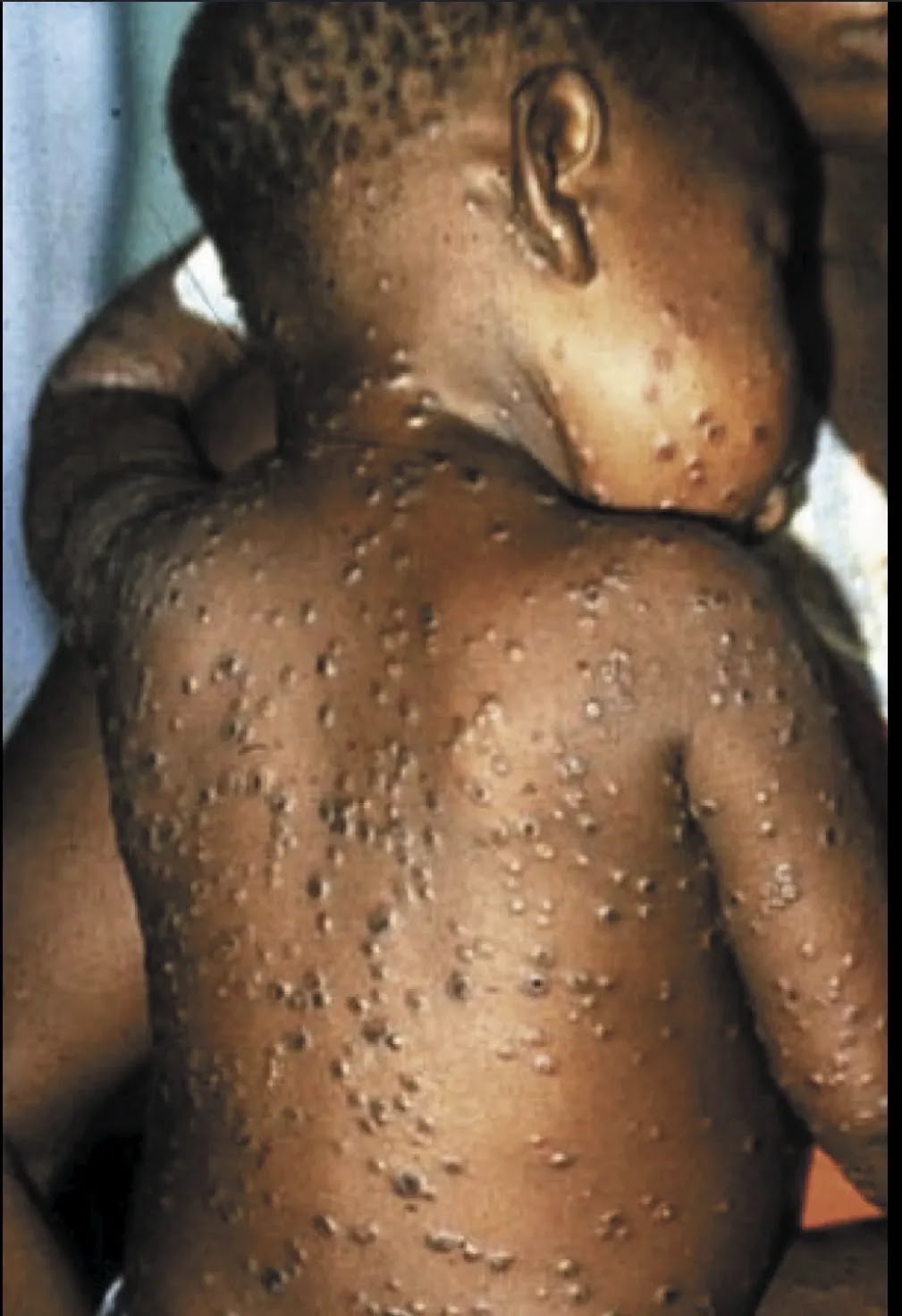
We are proud to share that a project we partnered on with the World Health Organization has reached a major milestone the development of the First WHO International Standard for antibodies to monkeypox virus (MPXV).
Why This matters
The next pandemic will not wait for us to make our biological data comparable.
That is why the development of a First WHO International Standard for antibodies to Mpox virus, documented in WHO/BS/2026.2514, matters far beyond the laboratory bench. It represents something easy to overlook in an age dominated by artificial intelligence: before AI can reliably learn from biological data, we need confidence that the measurements feeding those models mean the same thing across laboratories, countries, platforms, and time.
Biological standards are infrastructure for the AI era.
Without that infrastructure, even sophisticated models risk learning differences in laboratory methods rather than differences in biology.
The problem is bigger than a vial
An international biological standard may look deceptively simple. It is a reference material that laboratories can use to calibrate assays and express results against a common benchmark.
For emerging infectious diseases such as Mpox,ebola, marburg and more researchers need to compare antibody responses generated in different studies, populations, vaccine programs, and geographic regions. They need to understand whether an antibody measurement from one laboratory is genuinely comparable to a measurement generated thousands of miles away.
Historically, that has been difficult. Different laboratories may use different assays, reagents, platforms, protocols, endpoints, and reporting conventions. A result that appears to represent a "high antibody titre" in one system may not be directly comparable with a result generated elsewhere.
WHO International Standards address that problem by providing a common reference point and, where appropriate, internationally assigned units. WHO has repeatedly emphasized their role in harmonizing biological assays and enabling meaningful comparison across laboratories.
Why Mpox makes standardization especially important
Mpox belongs to the Orthopoxvirus genus, a family characterized by substantial antigenic similarity and cross-reactivity. That creates an additional challenge when researchers are trying to interpret antibody responses following infection or vaccination.
WHO's earlier work on the Mpox antibody standard specifically identified cross-reactivity between orthopoxviruses as a complication in interpreting serological results.
The candidate material, NIBSC 22/218, was developed from pooled convalescent plasma and produced by the UK Medicines and Healthcare products Regulatory Agency's National Institute for Biological Standards and Control. The material was solvent-detergent treated and designed as a research reagent for developing and evaluating serological assays.
A biological standard is not simply a sample distributed to laboratories. It has to be carefully sourced, characterized, processed, tested, stored, transported, and evaluated across laboratories before it can serve as a meaningful reference.
From biological samples to global comparability
The development of these standards also highlights an often-overlooked part of pandemic preparedness: access to high-quality human biological material.
Reference materials for emerging pathogens frequently depend on samples collected from people who have experienced infection or vaccination. Obtaining those samples can require ethical approvals, informed consent, local partnerships, biosafety procedures, export and import permissions, documentation, and stringent chain-of-custody controls.
That work often happens far from the headlines. Yet it is foundational.
A sophisticated assay cannot compensate for poorly characterized source material. An AI model cannot create biological ground truth that was never captured. And a global research program cannot move at pandemic speed if the underlying samples cannot legally and safely move through the research ecosystem.
This is why biological sample access and standards development belong in the same conversation as pandemic preparedness.
Where AI enters the picture
This is where the implications become even more interesting.
AI and machine learning are increasingly being applied to infectious-disease research, including the analysis of immunological data, prediction of immune responses, vaccine research, and the identification of patterns across large biological datasets.
But an AI model does not inherently know why two measurements differ.
Suppose a model is trained on antibody measurements generated by ten laboratories. If those laboratories use materially different assay systems and reporting conventions, the model may detect laboratory-specific patterns and mistake them for biological signals.
That is the biological equivalent of garbage in, garbage out.
Standardization does not eliminate every source of variation. Nor does an International Standard make different assays identical. What it does is create a common reference framework that makes measurements more comparable and gives researchers a much stronger basis for interpreting differences.
The better the underlying biological measurements are calibrated, the more likely a model is to learn biology rather than measurement artifacts.
Standards create a biological ground truth
AI researchers often talk about ground truth as though it is simply a property of a dataset.
In biology, it is much harder.
Ground truth may depend on how a specimen was collected, how it was processed, which assay was used, what reference material was applied, and how the result was normalized.
International biological standards help establish that reference layer. They create a common language between laboratories.
They also make it easier to combine datasets generated in different places and at different times, which becomes increasingly important as studies become larger, more distributed, and more computationally driven.
This is particularly relevant for emerging pathogens, where researchers may have only limited numbers of samples and cannot afford to waste information because measurements are not comparable.
Why this matters for Africa
There is another dimension to this work that deserves greater attention.
Many of the biological signals we need to understand emerging infectious diseases originate in the places where those diseases circulate. Yet the research infrastructure required to collect, characterize, transport, and analyze biological material is often concentrated elsewhere.
That creates a structural bottleneck.
If pandemic preparedness is global, then the infrastructure for generating high-quality biological data has to be global too.
Our team contributed to this effort by helping facilitate access to convalescent biological samples from the Democratic Republic of Congo that supported the development of this standard.
That work required navigating the practical realities between an outbreak setting and the international research system: ethical requirements, sample access, documentation, regulatory processes, logistics, and chain of custody.
.
The lesson extends beyond Mpox
The most important lesson from this milestone is not limited to Mpox.
The world is investing heavily in AI for drug discovery, vaccine development, clinical research, diagnostics, and outbreak intelligence. But computational infrastructure alone will not solve the reproducibility and comparability problems in biological research.
We also need:
high-quality samples, standardized assays, reference materials, interoperable data, and trusted measurement frameworks.
Those foundations are less visible than GPUs or large language models. They are also much harder to build.
But when the next emerging pathogen appears, they may determine how quickly the global research community can move from observation to understanding, and from understanding to action.
AI can accelerate biological discovery.
Standards make the data underneath that acceleration trustworthy.
That is why biological standards are not merely laboratory reference materials.
They are part of the infrastructure of pandemic preparedness.
📄 Read the WHO document: WHO/BS/2026.2514
References: WHO Expert Committee on Biological Standardization; NIBSC Working Reagent 22/218; WHO documentation on the development and harmonization of Mpox serological standards.