
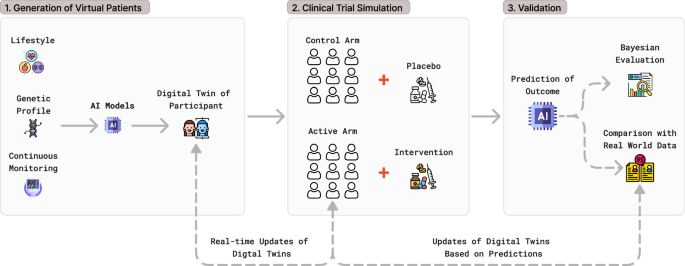
Clinical trials have historically struggled to include participants who reflect the full spectrum of the patient population. When large swaths of people (whether defined by race, ethnicity, age, gender, or other factors) are left out of research, clinicians end up with data that may not apply to many of their patients. Gaps like these mean we can’t be fully confident a new drug will be safe and effective for everyone who might need it. Moreover, the lack of inclusivity has tangible costs: it skews American medicine and contributes to health disparities that cost billions in lost productivity and early deaths. In short, ensuring diversity in trials isn’t just good ethics, it's critical science and good economics. Beyond the data, representation also influences public trust and adoption of new therapies. Doctors may hesitate to prescribe a treatment if its testing didn’t include the populations they serve, and patients are understandably more willing to trust and use medications proven effective in people like them. In one example, physicians treating Black patients were less likely to prescribe a drug that was approved based on trials lacking Black participants, whereas Black patients showed greater trust in a drug tested on a diverse group that included their community.
Pressure and Progress and Regress
In recent years, the call for more inclusive clinical research has grown louder in both political and regulatory arenas. Policymakers are
recognizing that inclusive trials lead to better health equity, and they’re starting to act on it. In the United States, for instance, Congress passed legislation in late 2022 (the Food and Drug Omnibus Reform Act of 2022) that requires drug and device sponsors to submit Diversity Action Plans for many pivotal trials. The FDA followed up with new draft guidance in 2024 outlining how sponsors must set enrollment targets for underrepresented racial and ethnic groups, women, older adults, and other demographics and justify how they will meet those goals. This is a big shift from the past, when diversity efforts were mostly encouraged but not mandated. Now, failure to address representation could slow down approval or trigger extra studies.
Globally, we see a similar push. The World Health Organization released new guidelines in 2024 urging countries to improve participant
diversity so that medical research benefits “the broadest range of people possible,” decisively moving away from a one-size-fits-all model.
Regulatory agencies in Europe have also emphasized inclusive trials.
At the same time, however, this topic has become entangled in broader political debates. In the U.S., discussions about diversity, equity, andinclusion (DEI) have at times become politically charged. There have even been executive orders and state-level actions aiming to curb “DEI programs,” which created uncertainty about what diversity initiatives are still allowable. For the clinical research community, this can feel like being squeezed from both sides, regulators and patients expect more diversity, but certain political currents push back on how we talk about and implement these efforts. It’s a tricky landscape to navigate. The good news is that improving trial diversity isn’t solely about sociopolitical programs; it can also be driven by innovative technology and data-driven methods that rise above politics. This is where digital patient twins enter the story.
Traditional Diversity Efforts and Why They Fell Short
It’s not that the industry just woke up to the diversity problem; there have been prior efforts to make trials more inclusive. Sponsors have tried community outreach, opening more trial sites in underrepresented areas, loosening eligibility criteria, and partnering with patient advocacy groups. NIH-funded studies have for years been required to include women and minority groups in their plans. However, the impact of these efforts has been limited. A recent review by the U.S. The Inspector General found that even when trials had inclusion plans on paper, most still failed to meet their enrollment targets for underrepresented groups. In fact, about one-third of NIH sample trials didn’t even plan to include all major racial and ethnic groups, and more than half did not clearly explain their population choices. The follow-through just hasn’t been there.
Why is that? There are a few recurring hurdles:
● Trust and Engagement: Historically marginalized communities often harbor mistrust toward medical research (not without reason,
given past abuses). Building trust can take years of community engagement, and short-term trial recruitment drives sometimes fall flat if
that trust isn’t in place.
● Logistics and Access: Many trials take place at academic hospitals or major medical centers, which might be far from rural areas or
underserved urban communities. That means travel burdens, time off work, and other barriers that disproportionately affect those of
lower socioeconomic status. Even when willing, folks might simply be unable to participate.
● Eligibility Criteria Bias: Traditional trial criteria (like excluding those with multiple health conditions, or of certain ages) often
unintentionally screen out minority and older patients who have higher rates of comorbidities. Efforts to broaden criteria are underway,
but progress is slow.
● Limited Incentives: Until recently, there wasn’t a strong external incentive for companies to prioritize diversity. Many did it as a goodwill
effort, but timelines and costs often took precedence. In some cases, there were even disincentives – for example, strict rules around
compensating participants (to avoid “coercion”) made it hard to reimburse travel or time, which would help attract a more diverse pool.
Enter Digital Patient Twins: What Are They?
Digital patient twins are essentially virtual copies of real patients, created using comprehensive data about those individuals. Think of it as a high-fidelity computer model of a patient’s physiology and health status, which can be used to simulate how that patient might respond to different interventions. These aren’t just simple avatars; they are built from real-world data like medical records, genomic information, lab results, and even lifestyle factors. Advanced algorithms (often AI-driven) weave these data points together to create a computational replica of a person that mirrors their medical profile.
What can you do with such a digital doppelgänger? A lot, it turns out. Researchers can “rehearse” clinical decisions on digital twins before
applying them in real life. For instance, a scientist could virtually test a new drug on a digital twin to predict how the real patient might react – all without putting the actual patient at risk. In the context of clinical trials, digital twins can be used to simulate trial scenarios, predict outcomes, and even serve as virtual participants in certain cases. One biotech company famously created “TwinRCTs,” a system where a control arm of a trial (the placebo group) can partly be replaced by digital twins generated from historical patient data. This means fewer real people need to get a placebo, which is good news for patients and makes recruitment easier. It’s like having a squad of virtual patients who can take on some of the experiment’s burdens.
Crucially, a digital twin isn’t bound by the same practical constraints as a real patient. A researcher can run dozens of different simulations on the twin – adjusting doses, combining therapies, forecasting different outcomes in a matter of hours or days, something impossible to do on a single real patient or within a single trial. This ability to rapidly experiment in silico (in the computer) opens up new possibilities for designing trials and treatments.
How Digital Twins Can Help Diversify Clinical Research
Now we get to the heart of the matter: how can these virtual patients help solve the diversity puzzle in clinical trials? It turns out digital twins, especially when coupled with AI analytics, offer several promising advantages:
● Simulating Underrepresented Populations: Digital twins make it possible to model patient profiles from groups that are hard to recruit
in real life. For example, if a trial struggles to enroll enough elderly Asian women with a certain rare disease, researchers could create
validated digital profiles of patients fitting that description and simulate their response to the drug. This doesn’t entirely replace real
participants, but it supplements our knowledge. Studies have shown that digital twin technology enables dynamic simulations in trial design, letting scientists explore how a treatment might perform across different demographics. In effect, we can fill data gaps by
virtually “bringing in” patient populations that are missing from the physical trial.
● Optimizing Trial Design Before Launch: A big reason trials fail to recruit diversely is that their design isn’t initially tailored to a broad
population. Digital twins allow sponsors to “meet the patients” even before the trial starts. By running a trial protocol on a virtual cohort
that mirrors real-world diversity, teams can spot issues early. Maybe the inclusion criteria unintentionally exclude too many people over
65, or perhaps the frequency of hospital visits in the protocol would deter working-class participants. These insights mean sponsors can
tweak the trial plan (number of sites, visit schedules, eligibility rules, etc.) before launching – rather than discovering too late that they
aren’t attracting the very populations they need. As Gen Li, CEO of a data analytics firm, put it: digital twin tech helps eliminate costly
protocol amendments by aligning trial design with the target patient population from the get-go.
● Reducing Reliance on Placebo Arms: Traditionally, to demonstrate efficacy, many patients have to be placed on placebo or
standard-of-care arms, which can be a deterrent for enrollment (people generally prefer a chance at the new treatment if they sign up).
Digital twins offer the exciting ability to serve as virtual control patients. The FDA itself has noted that using these virtual patients could
reduce the number of people needed in control groups and even replace placebo cohorts with “computationally generated” records of
what would have happened to a patient on placebo. In practice, companies like Unlearn.AI have already shown this works: in a
partnership with pharma, they demonstrated that digital twins could cut the required size of a control group by up to 33% in an
Alzheimer’s trial. For trial diversity, this means fewer real participants need to be diverted into control arms and can instead receive the
experimental therapy. It also means you might be able to run a trial with fewer total participants while still obtaining robust data – which
lowers the hurdle to include sites in more diverse communities (since each site wouldn’t need to recruit as many people).
● AI-Powered Recruitment and Insights: When we talk about digital twins, we can’t ignore the role of artificial intelligence. AI algorithms
can analyze huge datasets of patient information to predict who might be a good candidate for a trial and how to reach them. By
leveraging AI on real-world health data, sponsors can identify communities or patient subgroups that are relevant for a study but
historically overlooked. For example, an AI might flag that a certain genetic variant common in one ethnic group could affect drug
metabolism prompting the sponsor to ensure that group is represented, either by targeted recruitment or by modeling that subgroup
with digital twins. Early evidence suggests AI tools can optimize recruitment strategies and even help find eligible patients in
underrepresented demographics through pattern recognition. This kind of data-driven approach takes some of the guesswork out of
outreach and can make diversity efforts more efficient.
For pharma companies, the appeal of digital twins goes beyond just pleasing regulators or avoiding criticism. This approach can streamline trials and potentially save time and money. Trials that struggle with recruitment often face delays or end up needing additional studies post-approval to confirm a drug’s effect in certain groups. By front-loading the process with robust simulation and inclusive design, companies can mitigate the risk of those costly delays and surprises. It’s a proactive investment: better trial design and diversity up front can mean a smoother path to approval and adoption later.